Published August 23, 2026 · Vancouver, British Columbia
Canada–United States relations · 1982–2026
My Last Bottle of American Whisky
For generations, Canadians and Americans built more than a market. We built trust. The latest trade war, tariff threats and frightening immigration detentions have made many Canadians—including me—question what happened to our closest friendship.
This is both a historical account and a personal statement. Facts are sourced; opinions are identified as the author’s own.
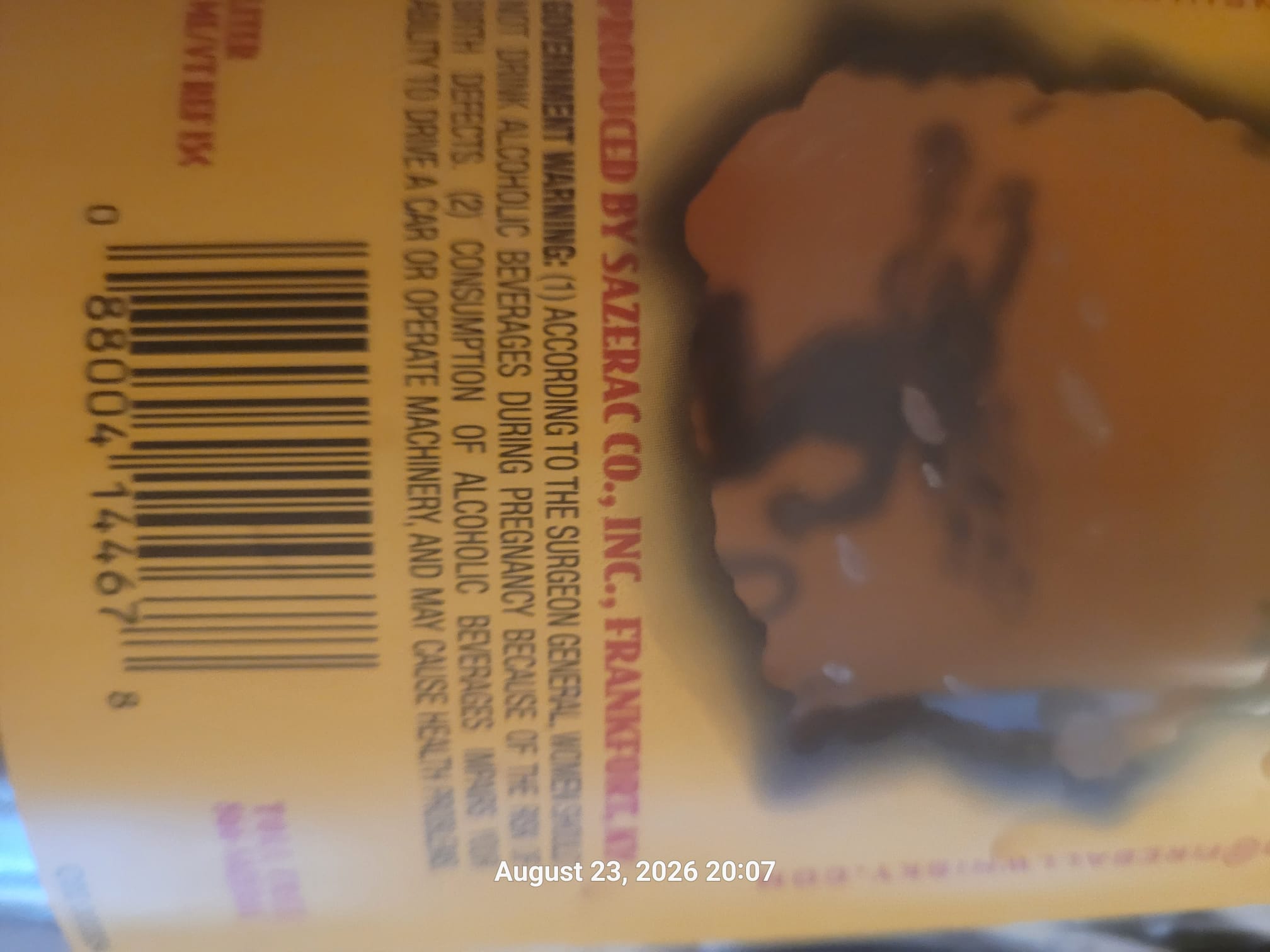
The last American whisky in my home — August 23, 2026
A personal turning point
It is only one bottle—but it represents a broken confidence
I am finishing the last bottle of American whisky that I intend to buy while this trade war continues. It was bottled by Sazerac in Frankfort, Kentucky. I do not blame the workers who made it, the shop that sold it or ordinary Americans. My decision is about where I choose to spend my Canadian dollars.
I once bought this bottle as a product from a friendly neighbour. Now it has become a reminder that friendship cannot survive indefinitely when one country repeatedly threatens the other’s economy and sovereignty.
A consumer boycott is a blunt tool. It can hurt American workers who did not create the policy. But peaceful consumer choice is also one of the few immediate ways an individual can express disapproval. My preference is now to buy Canadian whisky and support Canadian producers, workers and tax revenues.
Where matters stand
The 2026 trade crisis is no longer just a negotiation
As of August 23, 2026, negotiations have broken down, new tariffs are in force and Canada has announced retaliation. The relationship has moved from managed disagreement to open economic conflict.
⚠️
Current as of August 23, 2026
The United States imposed new 50% tariffs on roughly US$20 billion of Canadian goods after talks failed. Prime Minister Mark Carney suspended negotiations and announced dollar-for-dollar Canadian retaliation beginning September 8. No additional talks were scheduled when Reuters reported the breakdown.
50%new U.S. tariff rate on selected Canadian goods after the August talks failed
US$20Bapproximate value of Canadian goods covered by the newest U.S. duties
Sept. 8announced start date for Canada’s new retaliatory measures
How Canada “bent over backwards” for a deal
That phrase expresses the author’s judgment, but the record shows why many Canadians feel it. Canadian negotiators spent days in Washington trying to reduce or remove U.S. tariffs on steel, aluminum, automobiles and other goods. Reports said the parties appeared close to an agreement that might also have returned American alcohol to provincial shelves. Canada stayed at the table until the last minute. It then rejected revised U.S. terms that Prime Minister Carney described as unfair, uneconomic and damaging to confidence in any agreement.
Canada has repeatedly negotiated under a threat of U.S. withdrawal or unilateral tariffs. During the first Trump administration, Canada entered the NAFTA modernization talks partly to prevent a U.S. withdrawal and defend Canadian access to the American market. Canada accepted tougher automobile rules, provided additional U.S. access to parts of the Canadian dairy market and agreed to a 16-year review-and-extension structure. At the same time, Canada preserved important dispute-settlement procedures, cultural protections and most tariff-free trade.
Important correction: CUSMA has not expired. On July 1, 2026, the United States declined to extend it for a new 16-year term in its current form. The agreement itself remains in force and, unless the countries later agree to extend it, now faces annual reviews on the path toward 2036.
Watch and consider
Ronald Reagan’s case for free but fair trade
President Donald Trump said that U.S. trade talks with Canada were terminated after what he described as a fraudulent advertisement using remarks by the late President Ronald Reagan. This excerpt is from Reagan’s 1987 radio address on free but fair trade, in which he defended open trade while explaining his decision to impose duties on certain Japanese goods during a trade dispute. It is included as historical context; viewers should consider the full address and the primary sources listed below.
Video: excerpt from Ronald Reagan’s 1987 radio address on free but fair trade. If the embedded player does not load, watch it directly on YouTube.
A forty-four-year journey
From the 1982 Macdonald Commission to the 2026 CUSMA review
The present conflict did not appear from nowhere. It sits at the end of a long Canadian experiment: gain reliable access to the world’s largest nearby market without surrendering the ability to make our own national choices.
Pierre Trudeau appoints the Macdonald Commission
After the 1981–82 recession, the federal government creates the Royal Commission on the Economic Union and Development Prospects for Canada, chaired by former finance minister Donald S. Macdonald. Its mandate is much broader than trade, but its eventual recommendation will reshape Canada’s economic direction.
The commission recommends a “leap of faith”
The commission argues for comprehensive free trade with the United States. Prime Minister Brian Mulroney’s government embraces the idea as a way for Canadian firms to gain secure access to a much larger market and become more productive.
Formal Canada–U.S. negotiations begin
Canada and the Reagan administration begin negotiations. Canada seeks secure market access and enforceable dispute settlement; the United States seeks wider access to Canadian markets and resources.
A bilateral free-trade agreement is reached
The deal will phase out tariffs, reduce non-tariff barriers, cover services and establish dispute-settlement procedures. It is celebrated by supporters and condemned by opponents who fear lost jobs, weakened sovereignty and excessive dependence on the United States.
Canada fights the “Free Trade Election”
The agreement becomes the central issue of the November 21 federal election. Mulroney’s Progressive Conservatives win another majority, while the Liberals and New Democrats oppose the deal. The agreement is signed on January 2 and receives legislative approval later that year.
CUSFTA enters into force
The Canada–United States Free Trade Agreement begins eliminating tariffs in stages. Cross-border production and supply chains deepen, especially in manufacturing, energy, agriculture and services.
NAFTA adds Mexico
The North American Free Trade Agreement replaces the bilateral deal. It creates a three-country trade area with expanded rules for investment, intellectual property and dispute settlement. Trade grows significantly, although the distribution of gains and losses remains politically disputed.
President Trump forces a renegotiation
The first Trump administration threatens to withdraw from NAFTA. Canada, the United States and Mexico begin modernization talks under pressure, while U.S. steel and aluminum tariffs demonstrate how national-security trade powers can be used against close allies.
CUSMA is signed
Canada, the United States and Mexico sign the new agreement in Buenos Aires. A 2019 protocol amends labour, environmental, intellectual-property and dispute-settlement provisions.
CUSMA replaces NAFTA
The modernized agreement takes effect. It keeps most North American trade tariff-free while updating automobile rules, labour obligations, digital trade and review procedures.
Tariffs return as instruments of pressure
Canada faces successive U.S. tariff measures and threats affecting steel, aluminum, autos, lumber and other goods. Canada responds with counter-tariffs, support measures and intensified negotiations while trying to preserve CUSMA preferences.
The United States refuses to extend CUSMA
The first joint review ends without unanimous agreement to extend CUSMA’s term. The agreement remains in force, but annual reviews and continuing uncertainty follow.
Talks fail and the conflict escalates
New U.S. tariffs take effect. Canada suspends negotiations and announces dollar-for-dollar retaliation. A relationship designed around predictability is again governed by deadlines, threats and political discretion.
What the history teaches
Integration created prosperity—and dependence
What free trade achieved
It reduced most tariffs, encouraged continental supply chains and gave businesses a larger market. Global Affairs Canada reports that Canada–U.S. merchandise trade tripled between 1993 and 2018. Consumers gained greater choice, and many industries became more competitive.
What Canada risked
Greater integration made Canadian firms more exposed to abrupt U.S. policy changes. Industries and communities also experienced uneven benefits, job displacement and pressure to adapt. Market access proved valuable—but never completely guaranteed.
The sovereignty question
The central Canadian argument since 1988 has not been whether Americans are friends. It has been whether deep economic dependence reduces Canada’s room to govern itself. The 2025–2026 crisis has revived that old concern.
The unfinished task
Canada needs the United States and the United States benefits from Canada. But partnership should not mean dependency. Canada must strengthen east–west infrastructure, reduce internal trade barriers and expand trade with Europe, Asia and other reliable partners.
Border and detention concerns
Why I no longer feel safe visiting the United States
This is my personal risk judgment—not the official Government of Canada risk rating. I respect Americans and have enjoyed visiting their country. But recent immigration detentions have changed my willingness to cross the border.
Official Canadian advice: take normal security precautions
The Government of Canada does not currently advise all Canadians to avoid the United States. It does warn that U.S. border agents have significant discretion, entry rules are strictly enforced, electronic devices may be scrutinized and travellers denied entry may be detained while awaiting deportation. Canada cannot override a U.S. admission decision.
In March 2026, Canadian citizens Tania Warner and Ayla Luca were detained by U.S. Immigration and Customs Enforcement in Texas for 19 days—nearly three weeks. They were released after a judge found they were not a flight risk and after a US$9,500 bond was posted. The family maintained that their immigration documents were in order.
A Canadian traveller detained for 12 days
In March 2025, Canadian actor and entrepreneur Jasmine Mooney was detained after attempting to address a work-visa issue at the U.S.–Mexico border. She reported being held for 12 days, moved in shackles and confined in harsh conditions before returning to Canada.
These cases do not prove that every Canadian tourist will be detained. Millions of visits occur without such an outcome. They do show that citizenship, past trouble-free travel or an honest belief that one’s paperwork is valid do not eliminate the risk of detention when border officials disagree. For me, that risk is no longer acceptable—especially when travelling with children, elderly relatives or anyone who may have difficulty coping with confinement.
Travel is a personal decision. If you go, carry a valid Canadian passport, know the exact permitted purpose and length of your visit, check visa or work-authorization requirements, avoid inconsistent answers, expect device scrutiny, keep emergency contacts available offline and ensure someone in Canada has your itinerary. Never misrepresent the purpose of a trip.
Firmness without hatred
What Canadians can do now
Canada should defend itself without becoming anti-American. Governments change; neighbours remain. The goal is a fair, dependable relationship—not permanent hostility.
Buy Canadian where practical
Choose Canadian whisky, food, manufactured goods and local travel. Check the country of manufacture, not just the brand name.
Diversify our trade
Use CETA, the CPTPP and other agreements more effectively, while building ports, rail, electricity links and energy infrastructure within Canada.
Reduce internal barriers
A stronger Canadian common market makes it easier for businesses to sell across provincial borders and reduces vulnerability to foreign disruption.
Use targeted countermeasures
Retaliation should be lawful, proportionate and designed for political impact while limiting unnecessary harm to Canadian families and employers.
Keep American allies engaged
Work with governors, mayors, legislators, unions, businesses and consumers who understand that tariffs raise costs on both sides of the border.
Leave the door open
Insist on enforceable rules, respect and sovereignty—but remain ready to rebuild cooperation when the United States is prepared to honour stable terms.
Continue reading
Related pages included with this project
These pages present additional arguments, policy ideas and perspectives on Canada, the United States and the future of North America.
Source note: Fast-moving news can change after publication. Official statements give each government’s position; independent reporting is used to compare claims and describe events. Readers should check the linked sources for updates.
Disclaimer
This page is an independent personal commentary by Ted Lee. It is not an official statement of any government, political party, business or organization. It is provided for historical and educational discussion and does not constitute legal, immigration, travel, financial or trade advice. Border officials decide who may enter the United States. Travellers should consult current Government of Canada advice and, when needed, a qualified U.S. immigration lawyer before travelling. Product names and trademarks belong to their respective owners; the photographs document a personally owned product and do not imply endorsement.